After Disaster Strikes: The Long Way to Recovery
By Louisa Nachtmann, EDRC
10 June 2026
Natural disasters claim tens of thousands of lives every year, with annual death tolls averaging between 40,000 and 50,000 over recent decades. 1 Weather and climate-related hazards have been the dominant driver of this toll: between 1970 and 2019 they made up half of all recorded disasters, nearly half of all deaths, and almost three-quarters of total economic losses globally – with the vast majority of fatalities concentrated in developing nations. 2 The climate dimension of disaster risk has only grown more pronounced: over the past decade, the overwhelming majority – some 83% – of all disasters worldwide have been linked to climate and extreme weather events. 3 While the immediate aftermath of natural disasters, such as collapsed buildings, lost lives and displaced families, are obvious, long-term effects are not researched quite as well. After extreme storms economic growth in the area can be slowed for decades not just months. 4 Emergency relief remains vital, but communities need support for years after the disaster happened. Additionally, victims of natural disasters can suffer from financial strains, which leads to long-term health deterioration. 4
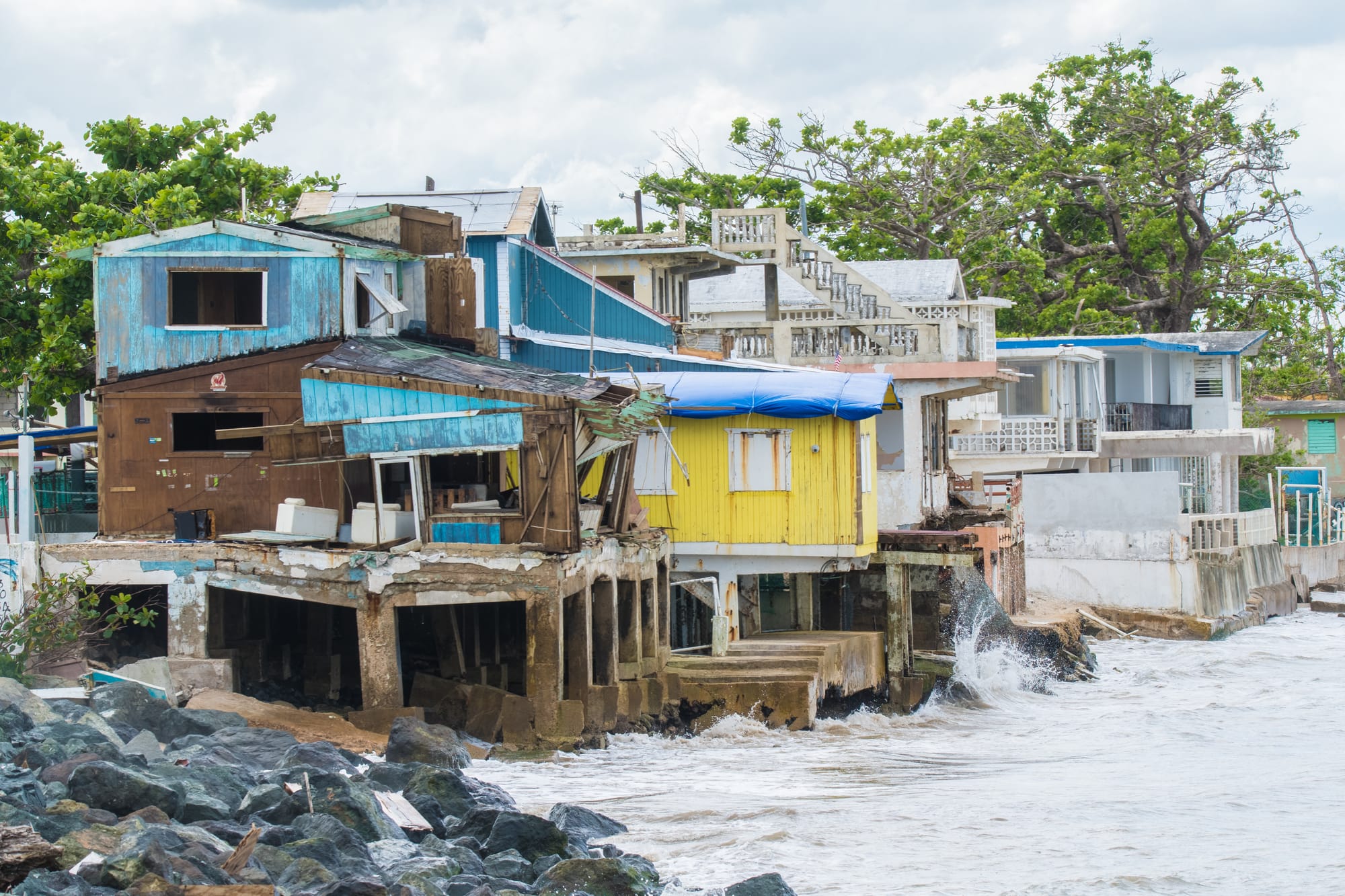
Especially evident is the long-term effect of disasters in mental health data. Following Hurricane Katrina, a study of low-income parents discovered, that the prevalence of serious mental illness was doubled and nearly half of the participants exhibited signs of PTSD. 5 The follow-up after five years confirmed, that this was more than a short-term shock. While PTSD symptoms declined after some time, they remained elevated for several years. 6 A predictor of chronic PTSD was the extent of home damage, while higher earnings proved as a buffer to PTSD. 6 The long-term effects are not just evident in mental, but also in physical health. In the six months following Hurricane Mara in Puerto Rico, mortality from a wide range of causes was substantially higher than the initial death certificate counts suggested. 7 This is further supported by the analysis of 400 indirect deaths during the Los Angeles wildfires, which were driven by poor air quality and disruptions to healthcare access. 8
Research identifies several groups, which are more likely to suffer from long-term effects: (1) children, especially girls and those from poorer families 9, (2) people with pre-existing chronic conditions 7, (3) older adults in socially isolated or multi-unit housing 7, (4) pregnant women and infants in utero 10, (5) low-income households with limited social networks 6.
Children experience disadvantages in several areas. A study of children affected by a super typhoon found negative and persistent effects on educational attainment, which exacerbated over time. 9 The study assumed a shift from parental investment from education during the recovery process. A 100-year analysis of Latin American natural disasters discovered the intergenerational reach of these effects. 10 The study found that the most fragile period in life for disaster-related shocks is during the first years of life and during early school age. The intergenerational effects of disaster shocks are more likely to be transmitted from mothers to children, than from fathers. 10
As much as the research in this area has advanced, major gaps remain. Especially in the area of policy evaluation studies to discover which specific interventions are most effective more research is needed. 11 Additionally, more research into the different experiences in rural versus city areas is necessary. 11
While understanding the long-term toll of natural disasters is essential, communities, governments, and researchers are also investing in strategies to reduce future harm. These efforts belong into two categories: mitigation, which aims to reduce the root causes of climate-driven disasters, and adaptation, which strengthens communities' ability to withstand and recover from them. ¹² Both strategies are needed for an effective way to deal with climate disasters. Some approaches double up as working as mitigation as well as adaptation strategies. For example, in the energy sector, decentralized grids powered by renewables can reduce emissions and better withstand climate impacts, with renewable energy sources being particularly well suited to decentralized grids because they can be harnessed closer to their point of consumption and can function independently after extreme weather events. ¹⁴ Additionally, investing in climate resilient mass transit, as well as building designs, which protect residents from extreme heat help by reducing emissions as well. ¹⁴ At the research level, tools such as big data analytics, artificial intelligence, and climate modelling offer support for designing interventions. ¹² An example is the EU-funded project PREVENT, which enhances the predictability of climate extremes in the Mediterranean on seasonal to decadal timescales, supporting proactive adaptation by delivering improved forecasts for sectors like agriculture, health, water, and tourism. ¹³
REFERENCES
1. Ritchie, H., Rosado, P., & Roser, M. (2022). Natural Disasters. Our World in Data. https://ourworldindata.org/natural-disasters
2. World Meteorological Organization. (2021). Weather-related disasters increase over past 50 years, causing more damage but fewer deaths. https://wmo.int/media/news/weather-related-disasters-increase-over-past-50-years-causing-more-damage-fewer-deaths
3. International Federation of Red Cross and Red Crescent Societies (IFRC). (2020). World Disasters Report 2020: Come Heat or High Water – Tackling the Humanitarian Impacts of the Climate Crisis Together. https://www.ifrc.org/document/world-disasters-report-2020
4. Stanford University News. (2025). Long-term community impacts of extreme weather disaster. https://news.stanford.edu/stories/2025/08/long-term-community-impacts-extreme-weather-disaster
5. Paxson, C., & colleagues. (2012). The Impact of Hurricane Katrina on the Mental and Physical Health of Low-Income Parents in New Orleans. PMC / National Institutes of Health. https://pmc.ncbi.nlm.nih.gov/articles/PMC3276074/
6. Five years later: Recovery from post traumatic stress and psychological distress among low-income mothers affected by Hurricane Katrina. Social Science & Medicine. 2011. https://www.sciencedirect.com/science/article/abs/pii/S0277953611006459
7. Excess mortality and associated community risk factors related to hurricane Maria in Puerto Rico. PMC. 2025. https://pmc.ncbi.nlm.nih.gov/articles/PMC11788712/
8. More than 400 indirect deaths linked to LA wildfires, study suggests. BBC News. 2025. https://www.bbc.com/news/articles/cx29wjg3vz2o
9. Deuchert, E., & Felfe, C. (2015). The tempest: Short- and long-term consequences of a natural disaster for children’s development. European Economic Review, 80, 280–294.
10. Caruso, G. D. (2017). The Legacy of Natural Disasters: The Intergenerational Impact of 100 Years of Natural Disasters in Latin America. Journal of Development Economics, 127, 209–233.
11. Kousky, C. (2016). Impacts of Natural Disasters on Children. The Future of Children, 26(1), 73–92.
12. Manjulatha, G., & Rajanikanth, E. Emerging Strategies in Climate Change Mitigation and Adaptation. Environmental Reports: an International Journal. https://er.researchfloor.org/emerging-strategies-in-climate-change-mitigation-and-adaptation/
13. European Commission. (2024). Climate Resilient Europe: Advancing Climate Adaptation Through EU-Funded Research. https://research-and-innovation.ec.europa.eu/research-area/environment/climate-change-science/climate-change-impacts-and-adaptation_en
14. Aggarwal, A., Brandon, C., & Kratzer, B. (2025, September 4). 6 Strategies that Achieve Climate Mitigation and Adaptation Simultaneously. World Resources Institute. https://www.wri.org/insights/strategies-achieve-climate-mitigation-adaptation-simultaneously
Photo: Hurricane Maria, Puerto Rico, September 2017, Getty Images licenced via SITE123.